August 21, 2026 · 130 pages · Paperback & Kindle
Nothing Holds: How to Understand Reality
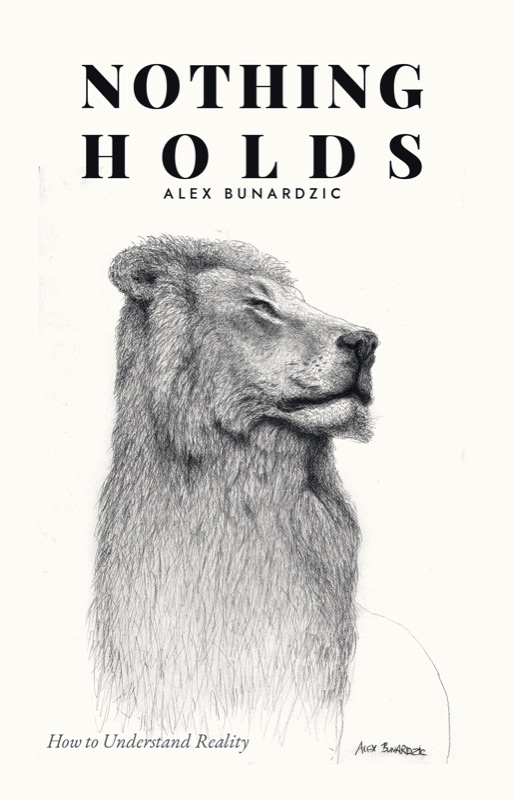
The sun does not rise — every eye on the planet reports otherwise, and every eye is mistaken. That gap between what intuition insists on and what evidence establishes is where the book starts, before turning on a stranger assumption: that causes only ever flow upward, from particles to molecules to minds, and never back down. No experiment ever delivered that rule. It arrived as a laboratory habit and hardened into doctrine. To audit it, Alex seats an improbable pair of reviewers side by side — Peter Atkins, who derives the laws of nature from the properties of nothing, and Nagarjuna, who demonstrated eighteen centuries ago that no phenomenon holds an essence of its own, nothing included. Along the way: a traffic jam that shoves cars around while consisting of nothing but cars, Maxwell's demon undone by the cost of his own memory, and a dying man refusing treatment until somebody tells him the arrow's exact velocity. No prior acquaintance with Madhyamaka philosophy or quantum mechanics assumed.
January 16, 2014 · 110 pages · Paperback & Kindle
Artisan Software Development for the 21st Century
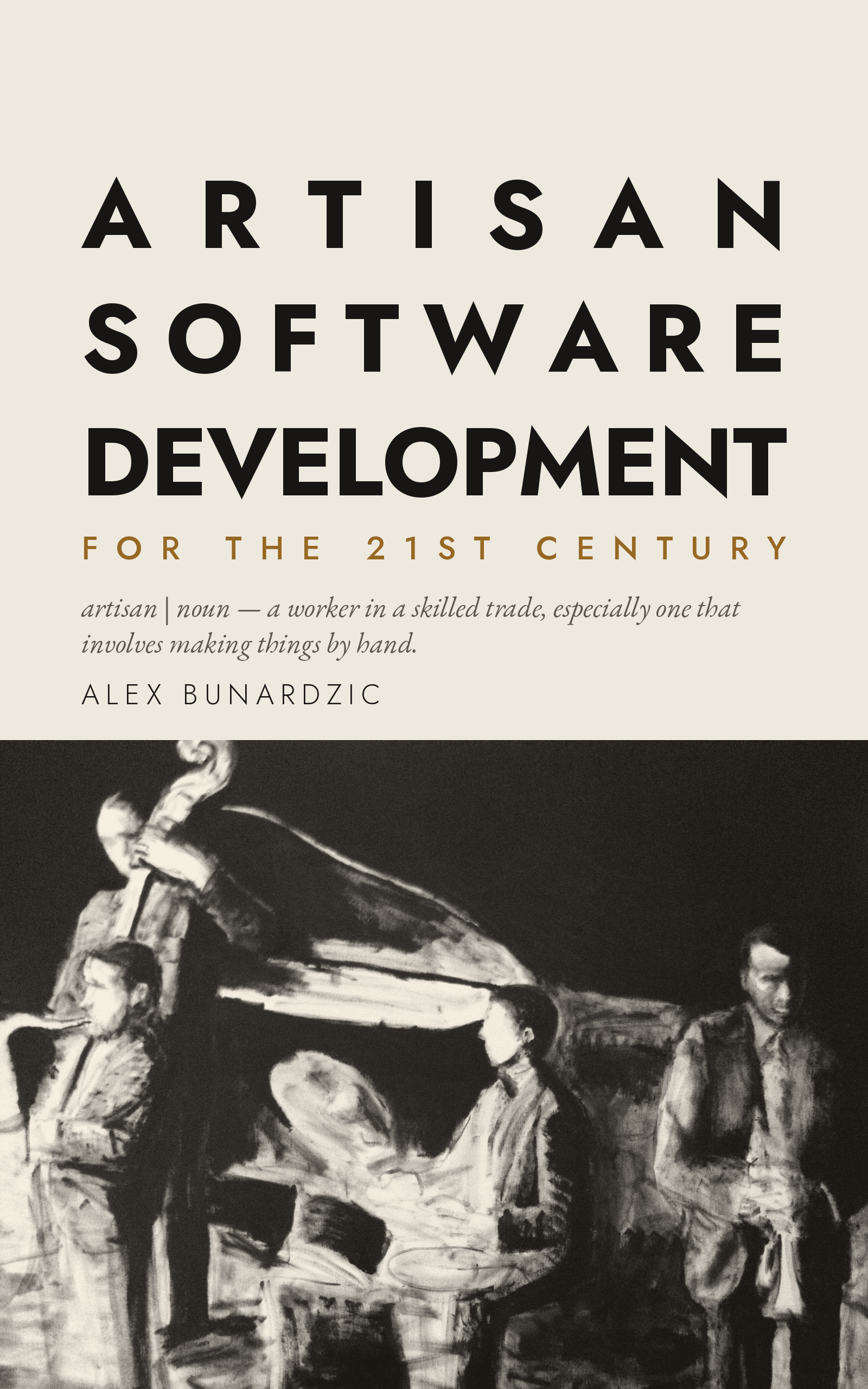
Hands-on instruction in building artisan-grade software for the web: robust, resilient REST APIs built on HATEOAS, the switch from class-oriented to genuinely object-oriented programming, and the top-down, outside-in approach to design. Turns on a distinction worth the price by itself — between solutions with no obvious deficiencies and solutions that obviously have no deficiencies. All exercises are worked in Ruby on Rails.
November 10, 2011 · 218 pages · Paperback & Kindle
Difficult Points In Buddhism
Buddhism as a system of philosophical thought that eschews metaphysics, staying inside the range of experience when establishing what is true about the world and our place in it. The book takes up the harder points a practitioner meets along the path, with particular attention to the facets of Buddhism as practised today that were never part of the original teachings.