CTO & VP Engineering Advisory Vancouver · Global

AI is shipping code faster.
Your architecture is paying the bill.

I help engineering leaders at AI-accelerated companies restore what AI quietly erodes: confidence that what you ship will hold. Faster delivery. Fewer incidents. Architecture that bends instead of snapping.

What clients come away with

  • Delivery that's fast and predictable — not one at the expense of the other
  • AI that accelerates your team instead of quietly compounding technical debt
  • Refactoring that's safe enough to do continuously, not just when it's critical
  • Engineers spending more time on intent and less time reacting to fires
  • A codebase that bends with the business instead of fighting it

His hands-on approach and deep technical expertise made him the go-to person when our teams needed innovative solutions to complex problems. His strong opinions are always backed by solid reasoning and real-world experience.

Andre Kaminski Director, Advanced Technology Solutions WorkSafeBC

Alex was successful in capturing my vision and solving countless problems to deliver programs that always exceeded my expectations. I always appreciated his out-of-the-box thinking and his can-do attitude.

Sandy Martin Senior Compliance Executive Raymond James Ltd

He has a gift for making complex ideas feel accessible while still challenging you to think more broadly. Every interaction has been thought-provoking and energizing. His presence is invaluable.

Woody Zuill Agile Guide & Senior Consultant Agile Expertise & Coaching

The Problem

Welcome to the Velocity Trap

Your sprint metrics look great. AI is shipping code faster than ever. Engineers are busy, boards are happy. And yet — release confidence is quietly collapsing. Reviews take longer. Incidents take longer to contain. Refactors feel dangerous. The system is speeding up and stiffening at the same time.

This is the Velocity Trap: AI dramatically increases output but also amplifies every existing weakness in your delivery system. Teams generating technical debt at AI speed, with no systematic way to keep their architecture healthy.

The standard fixes — more code review, more testing, better tooling — don't solve it. They address the symptom. The real problem is that engineers are simultaneously deciding where to go and managing how the system stays correct. At AI speed, that coupling doesn't hold.

Velocity without navigation is not progress. It's acceleration in an unknown direction with a degrading map.

You may be in the trap if…

  • AI is generating code faster than your team can review it
  • Refactoring feels risky enough that it doesn't happen
  • Sprint velocity is up but release confidence is down
  • Technical debt is growing, disguised as productivity
  • Your best engineers spend more time reacting than thinking
  • Architecture decisions are made by whoever moves fastest
If 3 or more of these land —
we should talk.

The Exit

What it looks like on the other side

Organizations that have worked through this transition describe the same set of changes — in roughly the same order.

Delivery becomes measurable

Instead of "it feels slow," there are clear signals — cycle time, defect escape rate, refactor frequency — that tell you how the system is actually performing.

AI becomes a force multiplier

Not a chaos source. AI executes. Engineers navigate. The split is clean enough that AI speed becomes real speed, not disguised risk.

Refactoring becomes routine

When the guardrails are in place, changing the system stops being a special project and becomes something that happens continuously, safely.

Quality regressions surface early

Problems are caught before they compound. Small failures are welcome — they're cheap to fix. Large incidents stop being inevitable.

Engineers think like architects

The shift isn't about hiring senior people. It's about changing what your existing team is being asked to do moment-to-moment.

Architecture serves the business

The codebase stops being a record of past decisions and becomes a living system that reflects current strategy. It bends instead of snapping.

"Alex introduced TDD to the team and set up structures that resulted in significant improvement in delivery time and quality — literally eliminated bugs in our product while meeting all requirements and deadlines." — Eugene Lin, Engineer (fintech)

The Method — Test-Driven Navigation

There's a specific reason the outcomes above are achievable systematically.

Every outcome described above depends on solving the same underlying problem: humans and AI need to play different roles, with tests defining the boundary between them. Without that boundary, AI speed becomes a liability. With it, AI becomes a precision instrument.

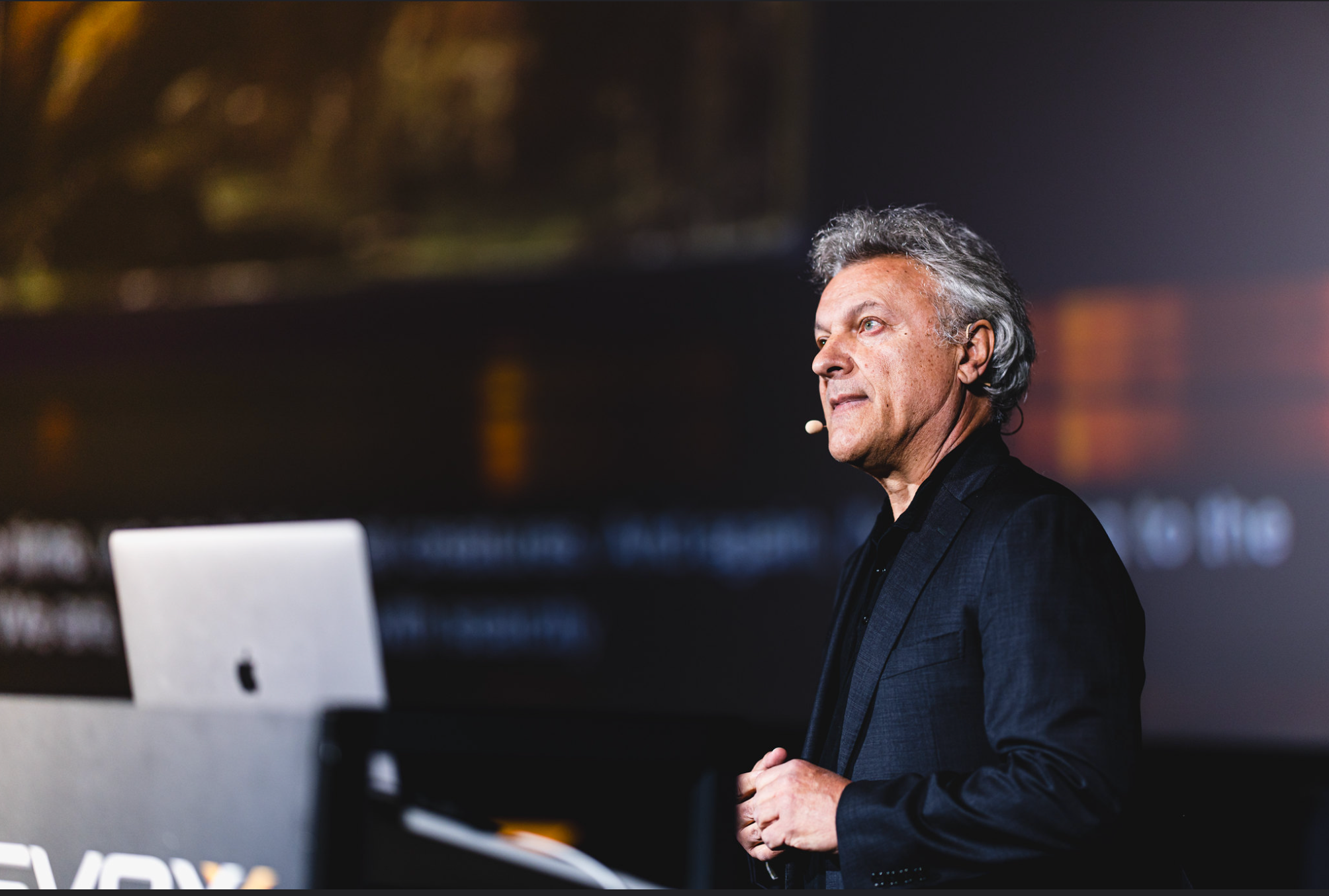
The framework I use to establish that boundary is called Test-Driven Navigation (TDN) — an evolution of Test-Driven Development designed specifically for AI-assisted software delivery. I introduced it in my closing talk at Devoxx Belgium and presented it internationally at the International Software Quality Days in Vienna.

Human — Navigates
  • What should happen next
  • Business intent & priorities
  • Architectural tradeoffs
  • Where the system should go
tests
AI — Executes
  • How to implement safely
  • Refactoring mechanics
  • Maintaining consistency
  • Enforcing constraints at scale
Tests are not a checklist. They're a navigation instrument.

Failing tests are hyper-specific instructions. They define exactly where AI should go next, and prove when it has arrived safely. This is not about writing more tests. It's about separating strategic intent from mechanical execution.

Honest Filter

Is this a fit?

My work is high-context and high-effort. Not every organization needs it or is ready for it. Here's a direct read.

✓  Good fit
  • CTO or VP Engineering at a 50–300 person SaaS
  • Using or seriously planning to use AI in software delivery
  • Want to move faster without sacrificing predictability
  • Accountable for both speed and quality — not just one
  • Willing to have a frank conversation about what's actually slowing you down
✗  Not a fit
  • Want AI to go faster with zero constraints
  • Looking for developer training or certification
  • Optimizing only for short-term velocity
  • Need a large firm with project managers and decks
  • Not using AI in delivery and not planning to

How We Work

Three ways to engage

Every engagement begins with a diagnostic. If there's a fit, we decide together what comes next. No boilerplate proposals. No multi-month ramp.

Prove it works

Pilot Accelerator

Hands-on TDN implementation with one high-impact team. The goal is a measurable, internal lighthouse project that builds momentum for broader adoption and gives you something concrete to show leadership.

$35,000 – $50,000  ·  6–8 weeks Learn more →
Ongoing counsel

Strategic Advisor

A retainer for leaders who need a trusted external perspective on complex technical decisions, AI strategy, or system evolution — without the overhead of a full-time engagement.

$8,000 – $12,000 / month Start a conversation →

About Alex

34 years. One consistent obsession.

I didn't set out to create a framework. I set out to solve a problem that kept showing up everywhere I worked: brilliant engineering teams drowning in technical debt they couldn't safely fix.

Over 34 years I watched organizations spend millions on digital transformation that left them slower than before. Teams paralyzed by fear of breaking production. Then in 2023, generative AI arrived — and I watched the same pattern repeat, only faster. Teams generating debt at AI speed with no systematic exit.

That's when Test-Driven Navigation crystallized. It's the synthesis of everything learned across fintech, healthcare, and regulated industries — applied specifically to the AI era.

  • 2026
    International Software Quality Days, Vienna Invited talk: AI and the Future of Refactoring
  • 2025
    Devoxx Belgium — Closing Talk Introduced Test-Driven Navigation to Europe's largest developer conference
  • 2021
    First International TDD Conference Organizer and host
  • WorkSafeBC · Raymond James · Healthcare & Fintech Engineering Practice Lead, transformation engagements across regulated industries
  • 1990
    First line of professional code Still writing them with the same intent: software should be soft enough to evolve

Proof of Thinking

See the work before you commit

Serious buyers don't hire on a headline. These are the places to pressure-test the thinking before booking a call.

Conference Talk · Devoxx Belgium

AI and the Future of Refactoring

The closing talk that introduced Test-Driven Navigation to a live audience of thousands. If this resonates, we should talk.

Watch on YouTube →
Writing · Essays & Articles

Published work on software craft and AI-assisted delivery

Articles on Opensource.com and Medium covering TDD, mutation testing, AI-assisted development, and the discipline of shipping small, safe steps.

Browse published work →
Community · AI Craftspeople Guild

A code of conduct for engineers using AI

A manifesto and growing community for engineers who believe AI-assisted development demands higher professional standards, not lower ones.

Explore the Guild →

Pioneer Program

Shape how TDN evolves in your industry

A small cohort of organizations working directly with me to validate TDN across different industries and tech stacks. This is not a discount program — it's a genuine co-creation partnership.

  • Priority access to all TDN tools, frameworks, and resources
  • Co-creation input — help shape how TDN evolves in your specific context
  • Lifetime advisory access (4 hours per quarter)
  • Conference case study feature (anonymous or named, your choice)
Apply for a Pioneer Spot →
2 Pioneer spots remaining for Q2 2026 Each engagement receives direct, hands-on involvement — no delegation

Your biggest competitor isn't
another company.
It's the drag in your own system.

A 30-minute diagnostic. No pitch. No hard sell. No obligation. Just a frank conversation about what's slowing you down and whether there's a fit.

Book the 30-Minute Diagnostic →